
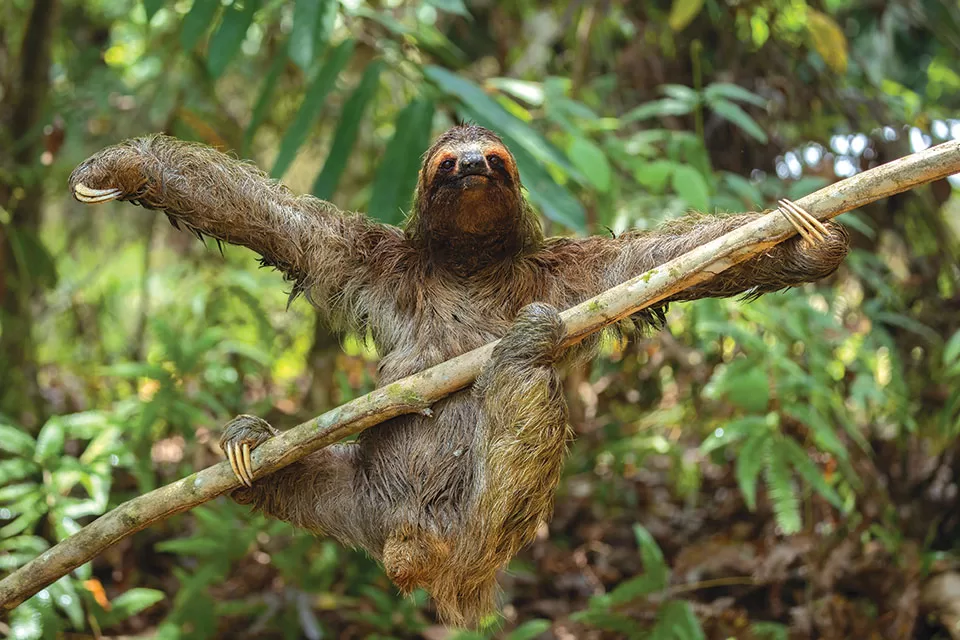
Classified as critically endangered and believed to have a rapidly declining population and habitat area, pygmy three-toed sloths are native exclusively to the island of Escudo de Veragua, off the Caribbean coast of Panama.
The species is notably smaller than other species of sloths. An adult pygmy three-toed sloth weighs between 5.5 and 7.7 pounds and measures 19 to 21 inches in length. Their external ear canals are conspicuously large. These features are thought to be indicative of a relatively rapid evolution of a new species in an isolated, island habitat. Very little is known about their lifespan.

Habitat destruction, a result of recurrent timber harvest on the island, is the main threat to pygmy sloth survival. Increasing tourism and the exploitation of species image, poses an additional threat because it makes the pygmy sloth more vulnerable to wildlife trafficking.
It is thought that the pygmy three-toed sloth primarily feeds on the leaves of the red mangrove trees in which it lives. Adults only come together to mate, finding each other using loud calls. Although the gestation period for the pygmy three-toed sloth is unknown, other species of three-toed sloth are pregnant for between 4 and seven months before giving birth. The mother bears one infant at a time, and will care for it bet-ween six months or a year during which time she will carry the young sloth with her everywhere she goes.
While their native island is uninhabited, seasonal visitors, including fishermen, lobster divers, and indigenous people, have been known to hunt the sloths. The sloths’ recent fame has also made them a target for capture and export for public display.
The most recent data on these sloths is disheartening, indicating there may be only 48 left – a significant decrease from the last estimate of 79 in 2013. Since 2006, the pygmy three-toed sloth has been listed on the Inter-national Union for Conservation of Nature Red List as “critically endangered.” It is not, however, listed as threatened or endangered under the US Endangered Species Act.